
Trans Conspiracies: An Intimate Journey through the Field of Trans Studies in Argentina
During my first three years as an undergraduate anthropology student, I thought the few trans people working in academia were the authors of my favorite articles and books. I felt alone among cisgender allies, feminist scholars, and openly transphobic, old-fashioned professors.
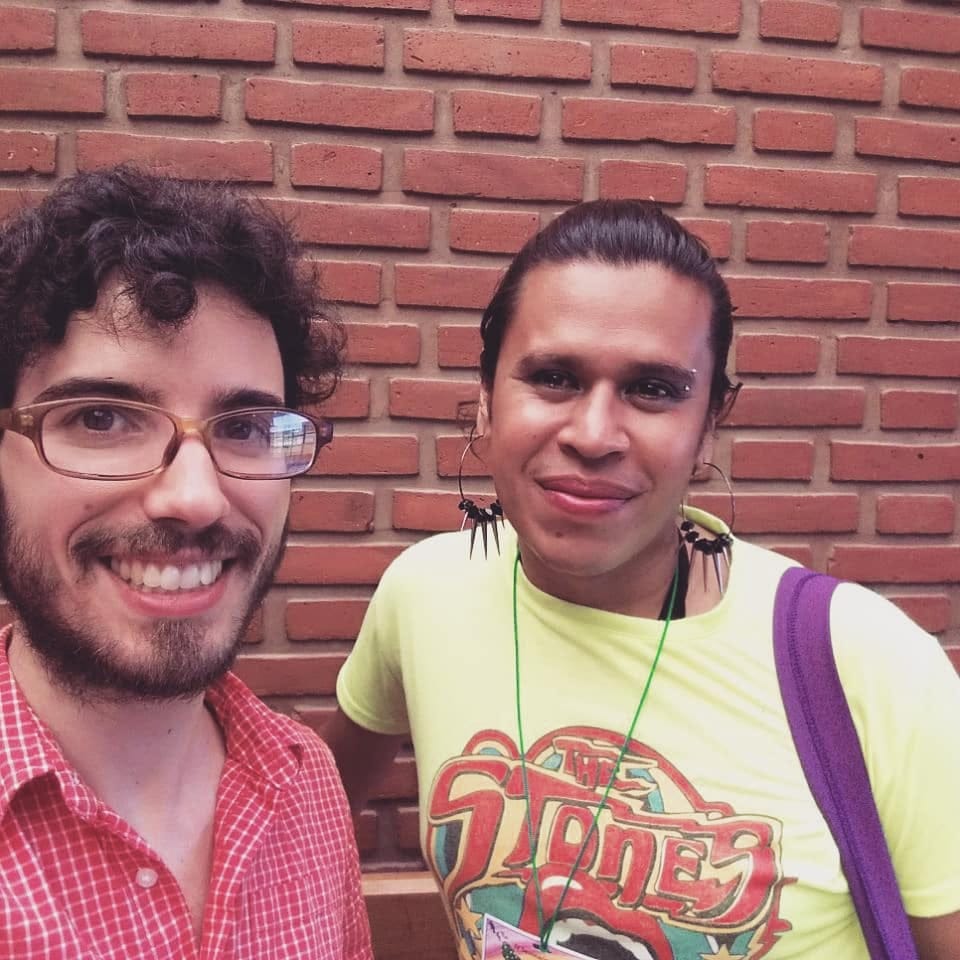
During my first three years as an undergraduate anthropology student, I thought the few trans people working in academia were the authors of my favorite articles and books. I felt alone among cisgender allies, feminist scholars, and openly transphobic, old-fashioned professors. In 2018, at a conference on the geography of sexuality, I met a trans scholar for the first time. After my presentation, a young Francisco Fernández Romero asked me to take a picture with him. He told me, "That’s the first time I've met a trans scholar at a conference!" We were both so excited, that was the first step in a long history for us and for our research field.
In 2019 and 2020 Fran and I (and also Martín Ignacio Torres Rodríguez, a trans geographer from Chile who met in the same conference) organized several activities and panels, sometimes confronting the opinions of some cisgender feminist geographers who considered trans issues a minor topic not worthy of its own field. Fran and I co-authored an article about the emerging field of Latin American trans geography, which is cited as essential reading in the field. With Fran's guidance, I met Andrés Mendieta, who is currently a Ph.D. candidate at Northwestern University, as well as Patricio Laterra, an economist and trans activist. We trans people became a group of collaborators, sharing archives, bibliographies, and resources. The isolation caused by the pandemic increased our virtual connections, and we added more and more people to our projects. During the pandemic, I collaborated with Delfina Acosta, Uma Reis Sorrequeia, Dan Kaio Lemos, I. Acevedo, and many other trans students and scholars across Latin America. Each of these panels and webinars has broadened my perspective on trans studies and the urgent necessity of building alliances among trans scholars.
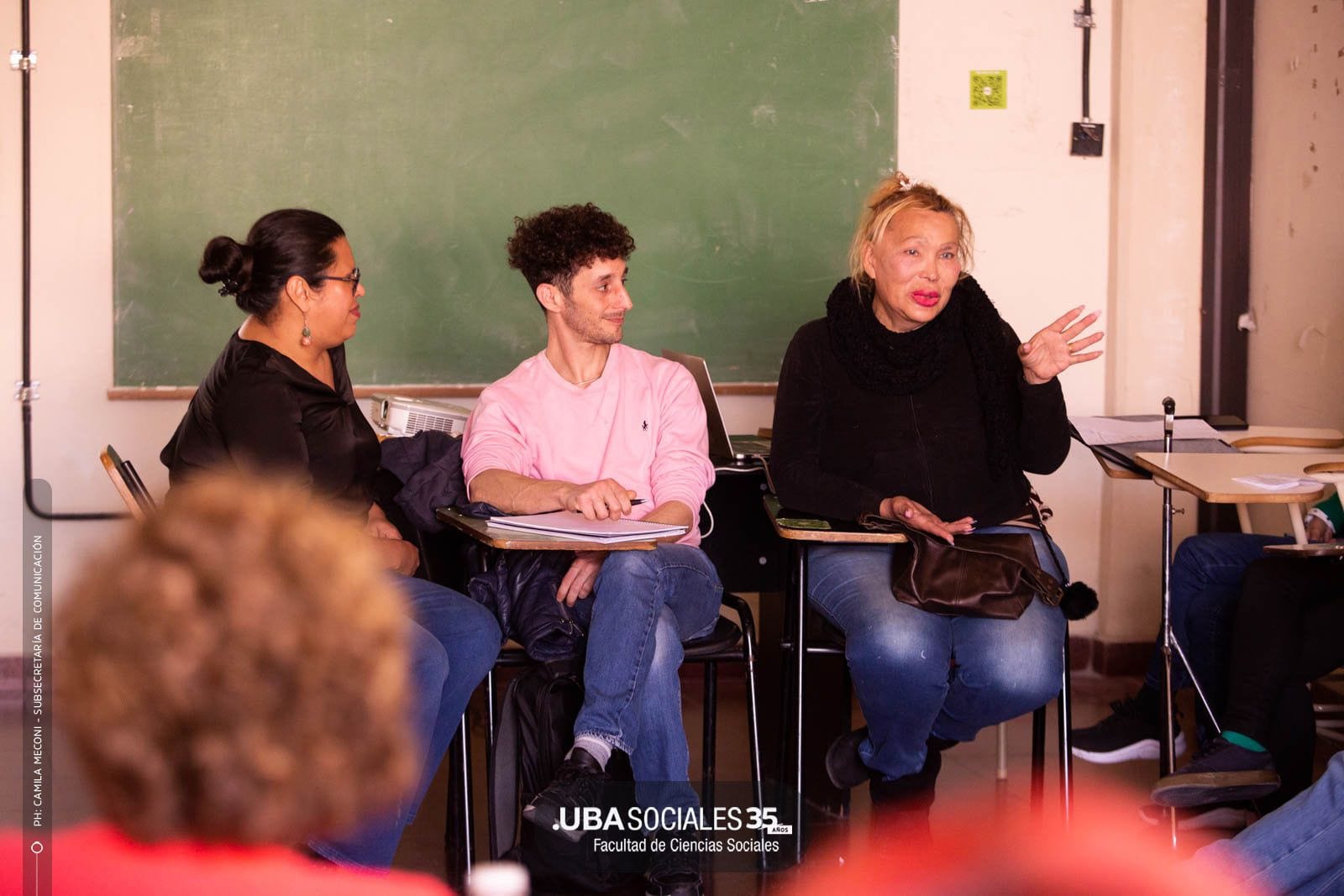
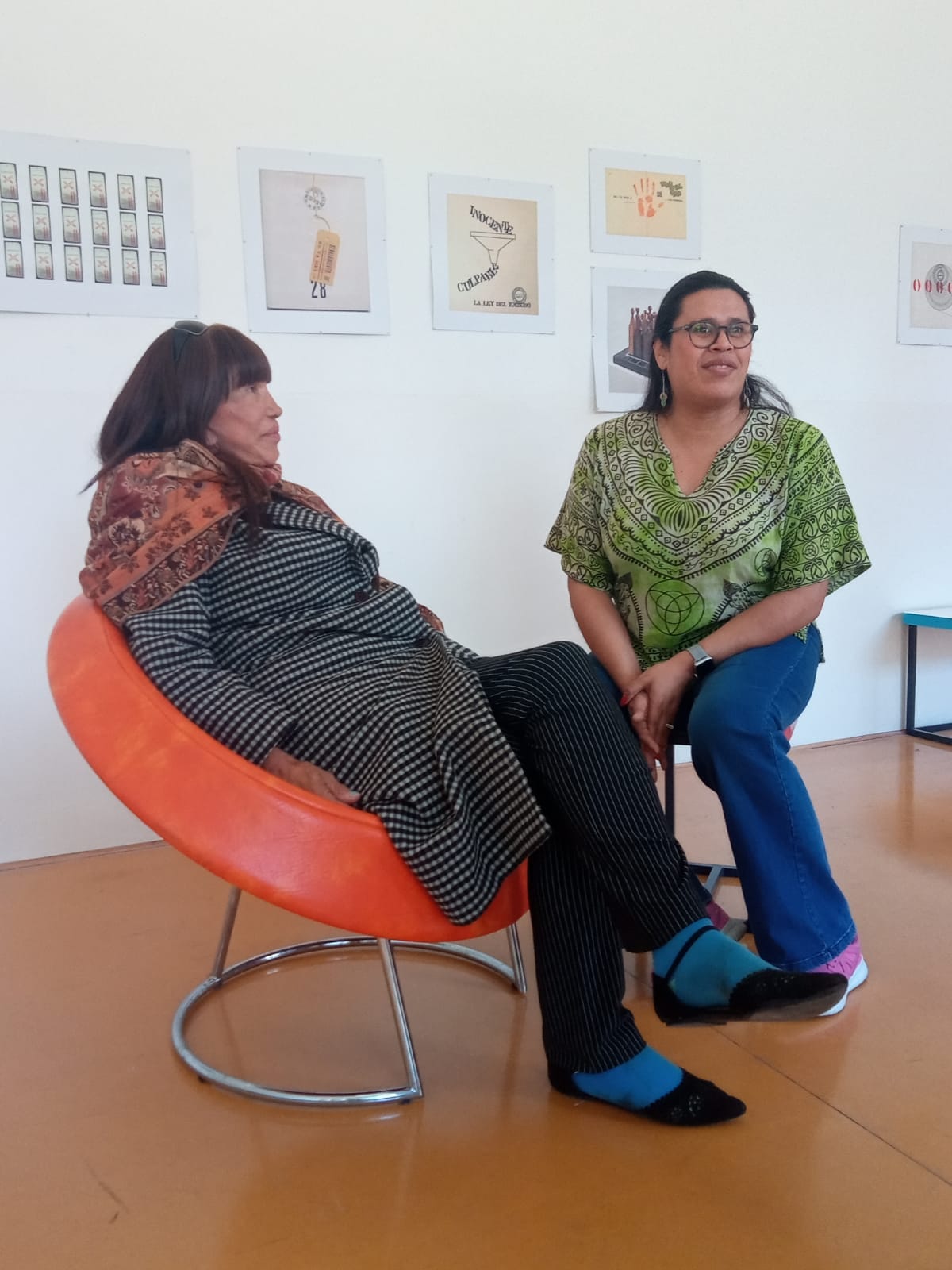
With travesti activists in academic events and research projects at the University of Buenos Aires and the Argentine Memory Archive.
As my relationship with trans scholars strengthened, I observed the growth of the trans studies field. I had the opportunity to serve as a reviewer for many journals and noticed that many recent graduates were researching trans migration, trans history, and other community projects. In the years following the pandemic, I collaborated with friends on many interesting projects. We taught classes together, organized panels on trans studies at LGBT and feminist conferences, and supported each other in the complex and competitive academic world. In 2021, I coordinated the first cohort of a course that I consider essential to my career and the development of the field: Introduction to Travesti Theory. In this course, I compiled all available resources about travesti identity and organized them to clearly explain travesti theory. At that time, although we already had books published by Marlene Wayar and Lohana Berkins about travesti theory, these ideas were mostly cited imprecisely or merely used to point out the inclusion of some trans and travesti authors in research. Despite the growing number of trans authors, cisgender scholars only mentioned a few trans authors and ignored the work of internationally famous scholars, such as Mauro Cabral and Blas Radi, who started their careers in the late nineties.
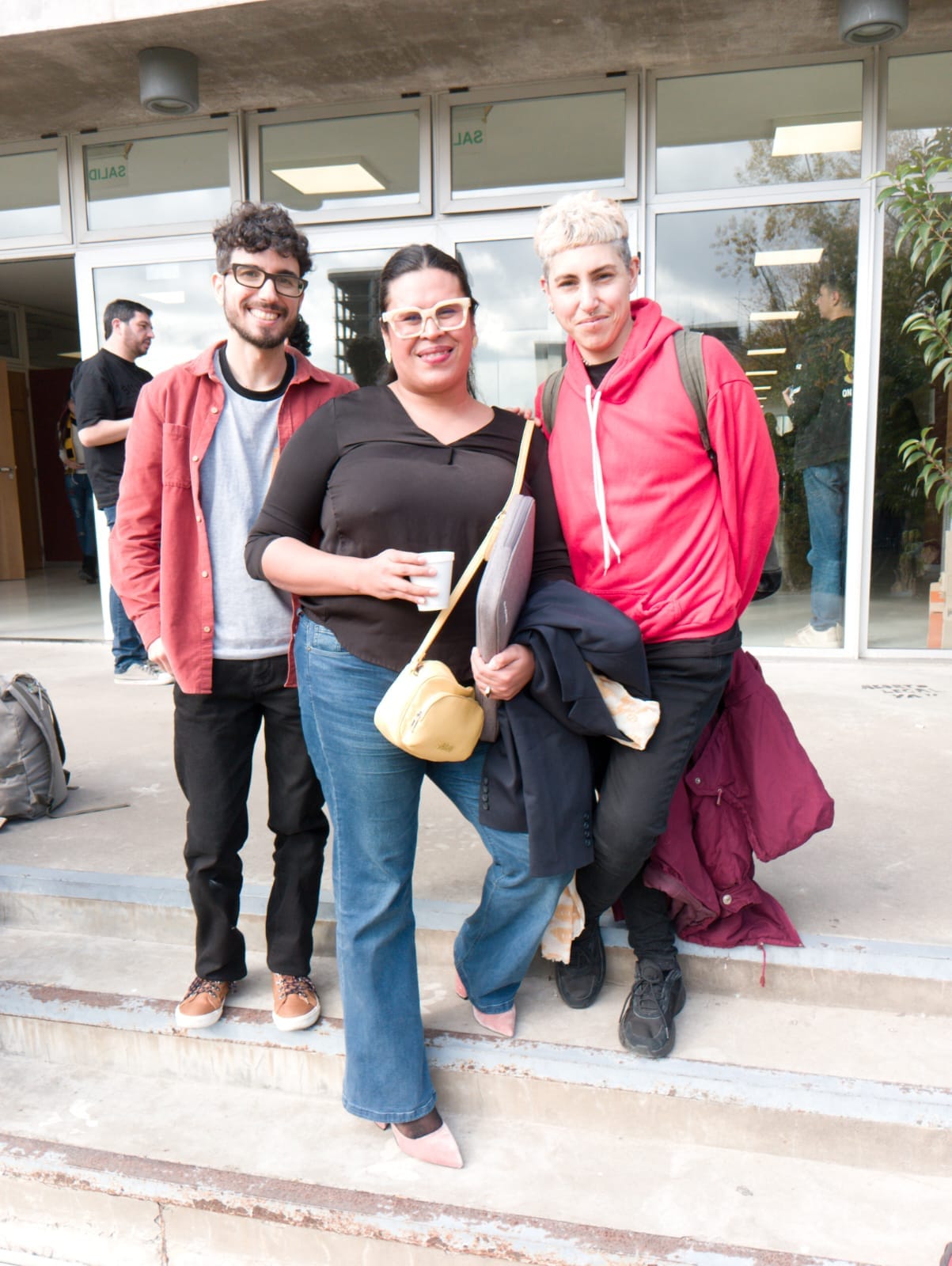
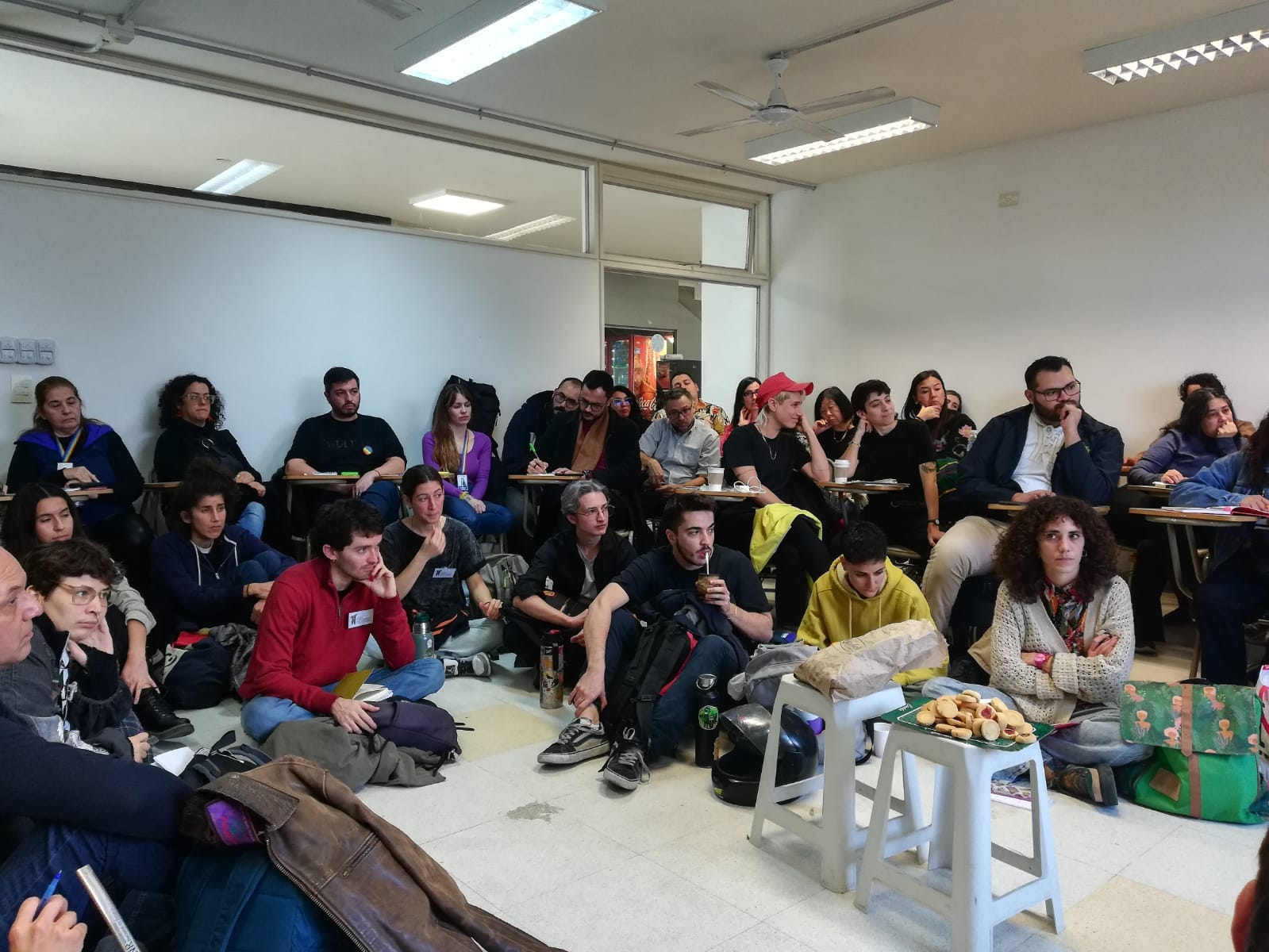
Pato,Francisco and I during the 1st Trans Conspiracies 2024 and some of the attendees to the event.
The Introduction to Travesti Theory course provided a significant opportunity to promote the work of my friends and colleagues, as well as an opportunity to share ideas and engage in debate with emerging scholars and students. Some professionals currently working in trans studies were previously part of that group, such as Monse Tolaba, Fidela Azarian and Mori Bolo. Thanks to the support of LatFem, a feminist news outlet where I worked for many years, the course always offered a scholarship to trans students. I taught the course three times between 2021 and 2022, and recently repeated the experience in 2025 with an international cohort and English-language classes. My friends Pato, Fran, and Andrés were part of this project, of course, as guest lecturers and students, but also as part of the syllabus.
I would like to recount all of our adventures together, but that would be impossible. I recorded a podcast with Andrés about trans studies, participated with Fran in the previous TPATH conference, and worked on many other projects. I also spent time with Pato, debating politics and panels on trans economics. After the pandemic, we had the chance to meet new trans scholars who came from the US and other countries to visit Argentina. In 2022, I met a trans Jewish scholar who suddenly became my best friend and intellectual partner. During Pesach in 2021, Mir Yarfitz visited Buenos Aires, and we attended a community seder at the Liberty Synagogue together. Although we had talked informally before, our first meeting and conversation were so intense that we almost missed the Seder while walking around the mysterious streets of Buenos Aires. After his visit, Mir and I developed a strong friendship that I can't describe with words. He is not only my friend; he is also the person I need to think, grow, and enjoy my academic life. There's a feeling where you feel safe being wrong; that's how I feel with him. As a result of our collaboration, Mir and I co-authored an article on trans and travesti history, which was published in the Oxford Research Encyclopedia, and countless hours of archival research together expressed in some of our articles, and our panel presentation at the last American Jewish Studies Association Conference.
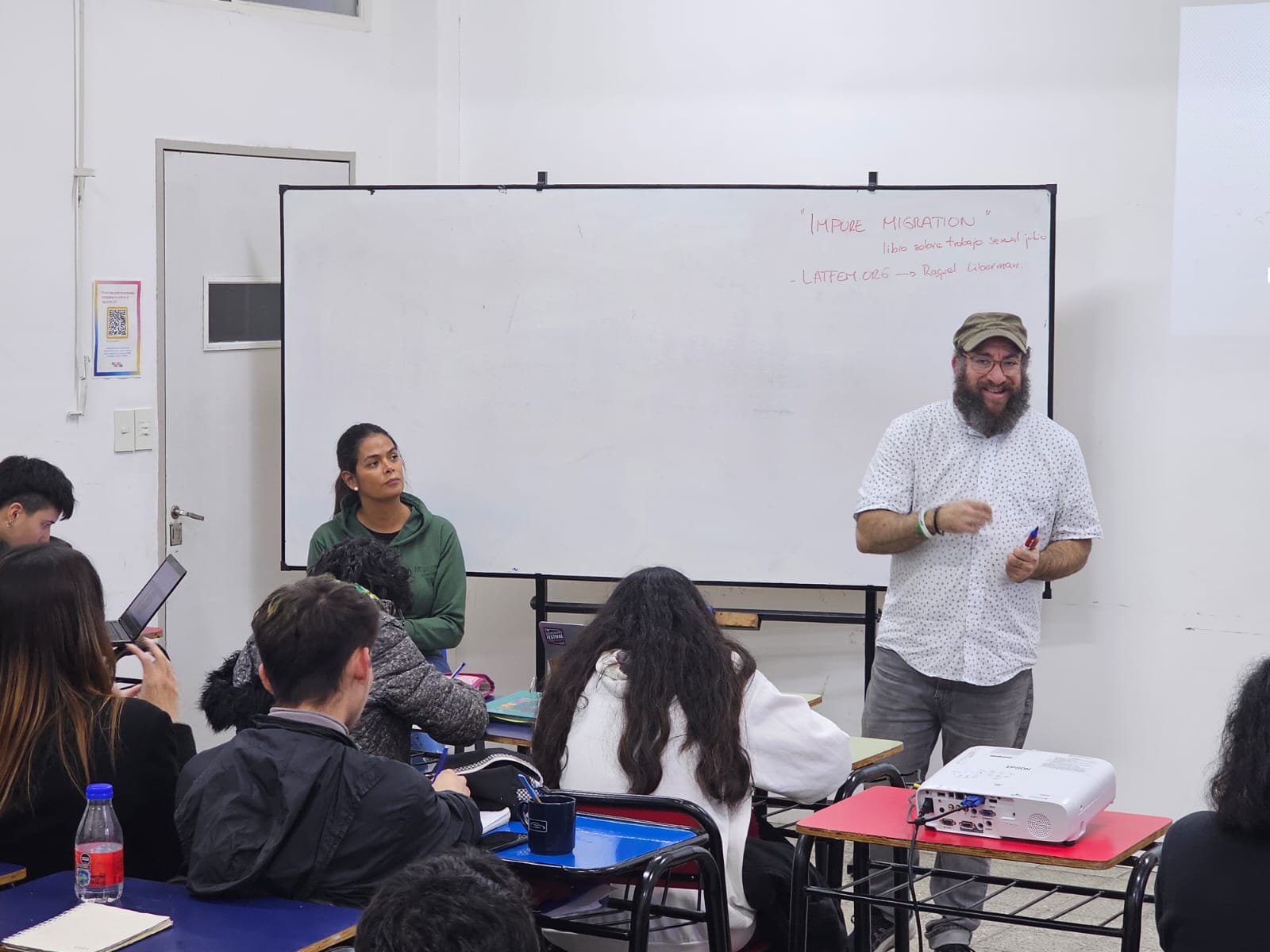
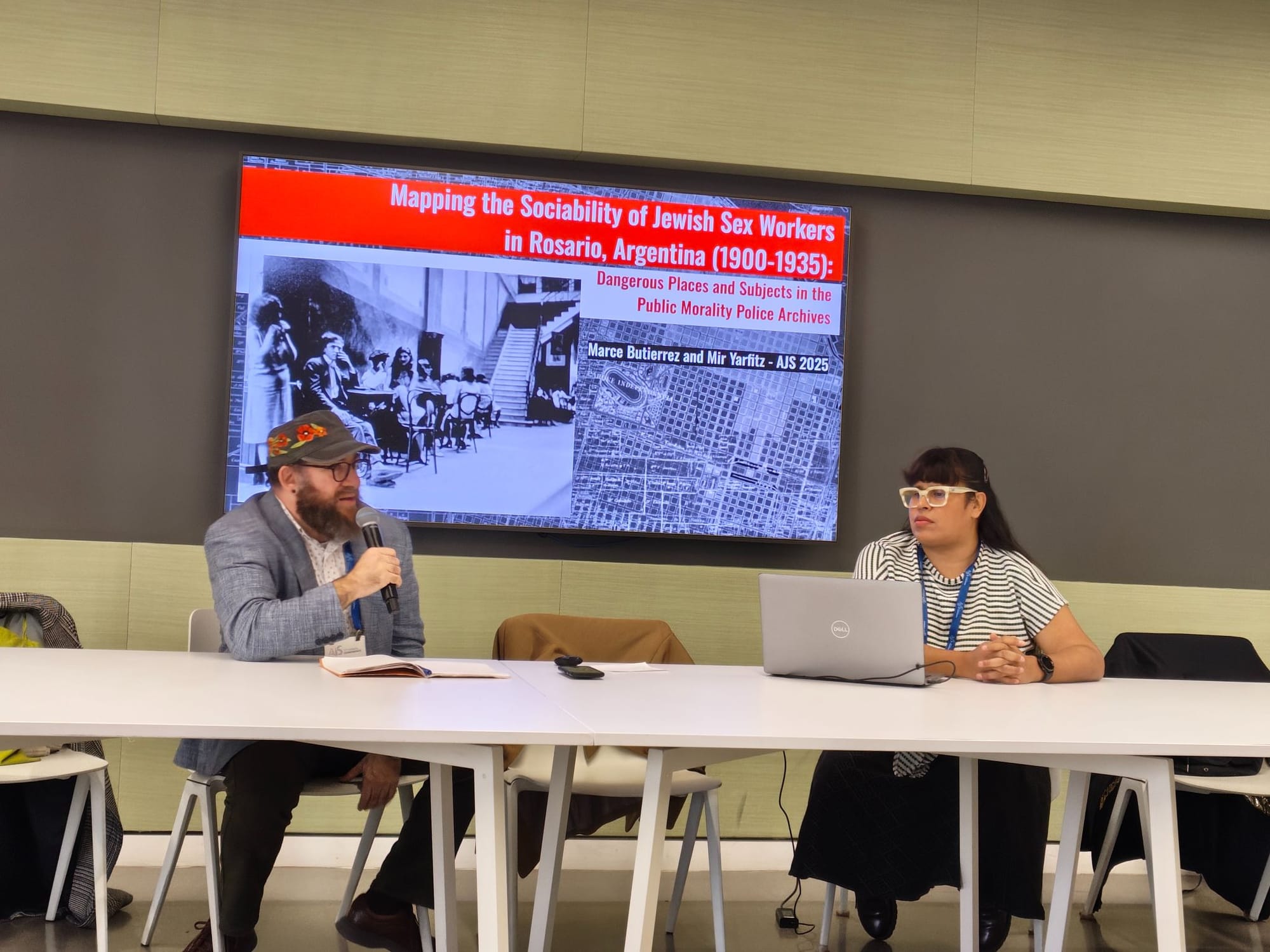
Left: Mir Yarfitz teaching a special class for my trans students in Buenos Aires, 2024. Right: Mir and I at the American Jewish Studies Conference 2025, Washington DC.
From 2018 to 2024, the field of Trans Studies grew considerably. Since my first meeting with Fran Fernandez in 2018, when we were surprised to meet each other, I have noticed an incredible increase in the number of trans people working in academic contexts. In fact, one of the last events I organized with Fran and Pato was the first assembly of trans scholars at the 1st National Conference on LGBT Studies, which we titled: "Trans Conspiracies." The name subtly expresses the perception that many cisgender scholars have of our participation in the academic world. I have experienced rejection, mistreatment, and rude criticism many times from cisgender colleagues who perceive my presence in academia as a threat to their careers and prestige, especially those who are always looking for a higher position in the system. Of course, sometimes we have some good feminist and leftist allies, but most of the time our trans voices are only heard as testimonies, never as theories. In my experience, my perspective is always welcome if I am agreeing with the cisgender perspective but never if I debate and confront the mainstream ideas widely spread among queer and cis people.
If one solitary trans scholar is perceived as dangerous, then a group of trans scholars organized to support each other is extremely dangerous to the established privileges and discriminatory structures in universities and institutions. Our 2024 Trans Conspiracies meeting brought together the experiences and concerns of 40 trans scholars! Compared to our first informal meeting with Fran, Pato, and Andres, we have grown from four to forty trans scholars and students thinking together about our future in academia, criticizing cisgender bias in science and the humanities, and planning future meetings and projects for and by trans people. Some days ago Fran and Pato told me about the 2nd Trans Conspiracies meeting at the 2nd National Conference on LGBT Studies where the attendees increased even more!
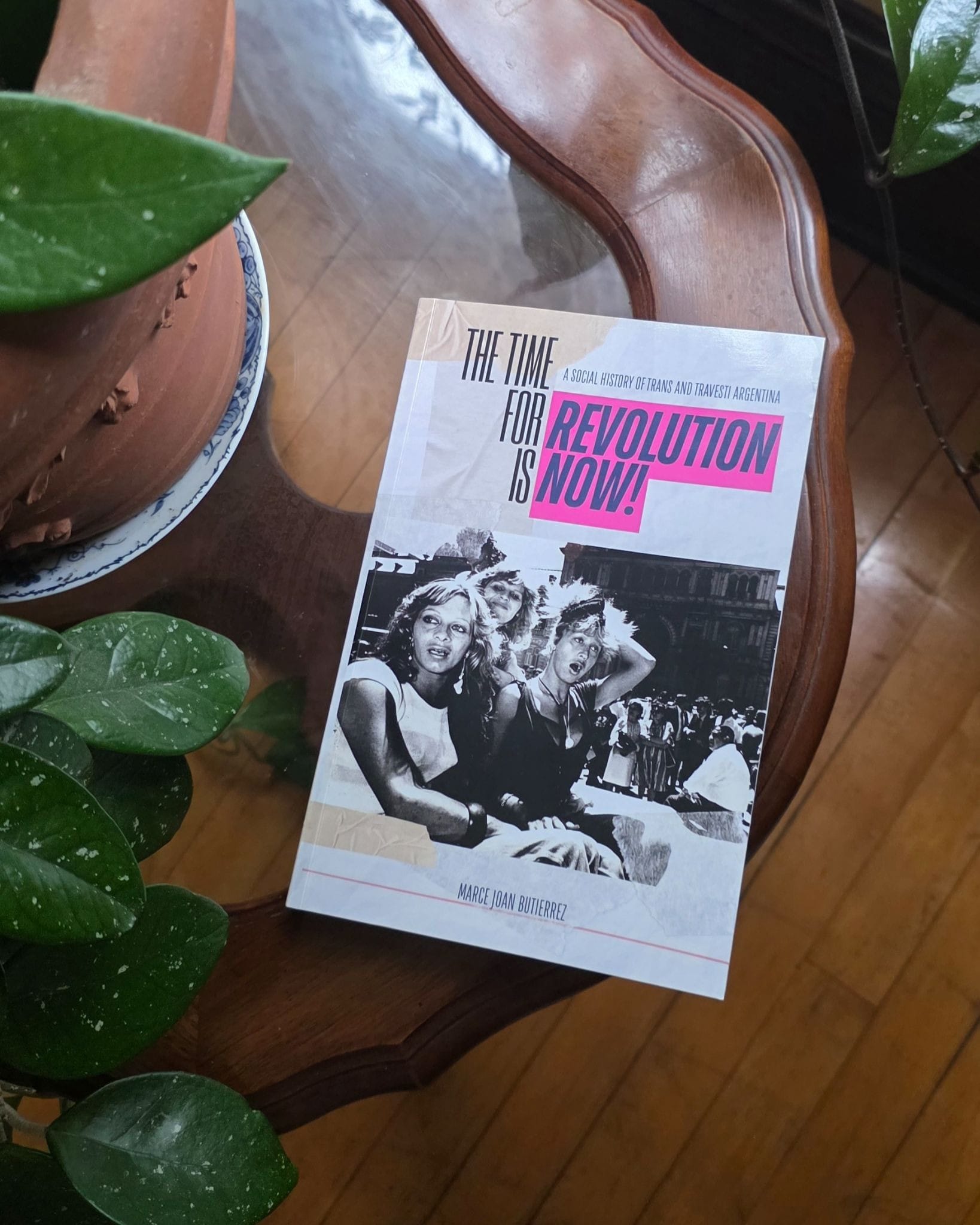
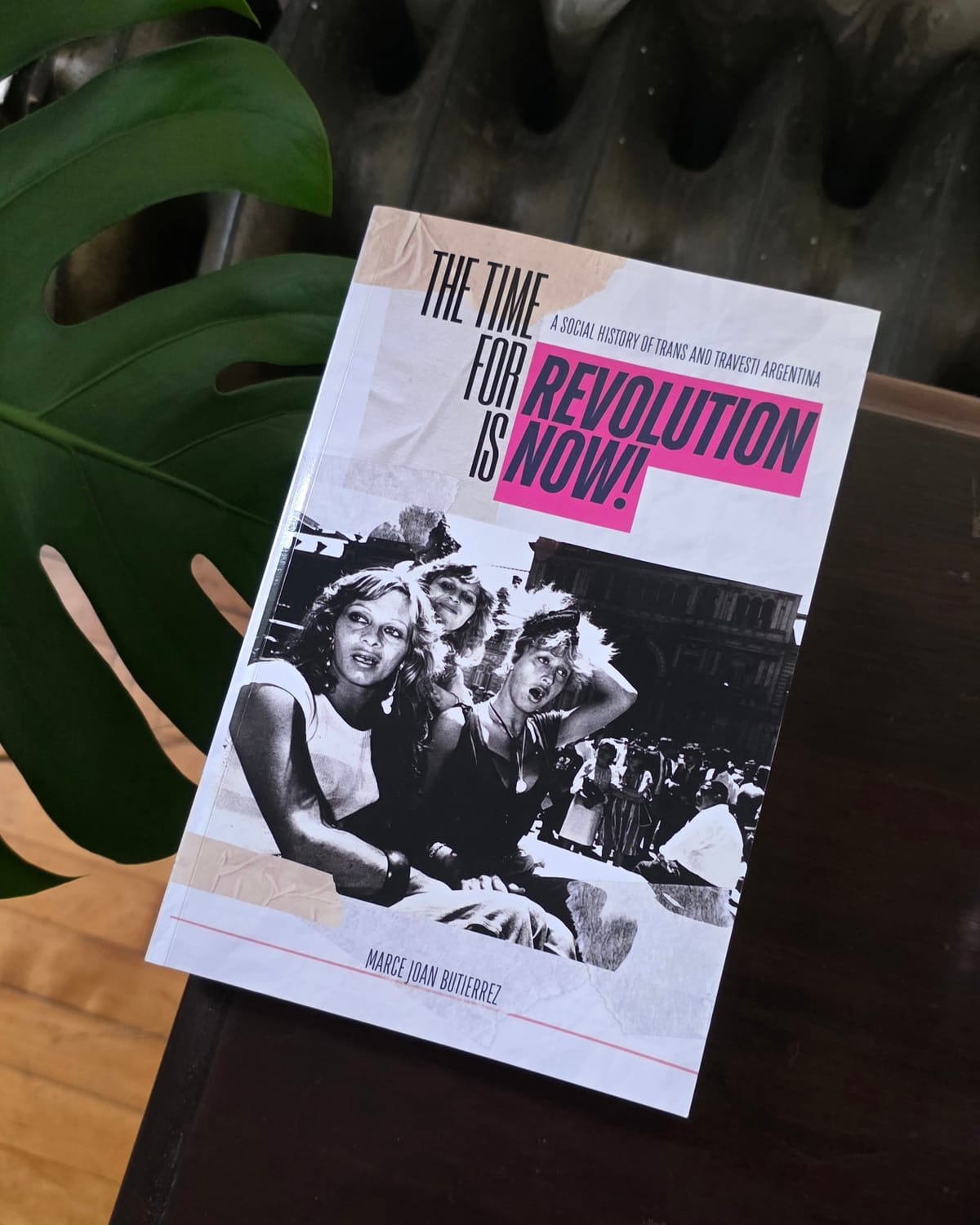
Now that I am in the United States, I am building a family project with my boyfriend and starting my PhD in History at the University of Minnesota. I was recently in Ann Arbor for the last Queer Trans History Conference, surrounded by my new trans friends, colleagues, and teammates in a new editorial project, Myra Billund-Phibs, Keira MacNeill, and Jamey Jasperson. I recently published my first English-language book: The Time for Revolution is Now! A Social History of Trans and Travesti Argentina which is the result of my experience as a trans scholar. It is also a testament to the friendship, care, and support of all my loving trans friends and colleagues who have worked with me over the last decade. I am happy to finally share a significant part of my previous research and work as a journalist and anthropologist with English readers. I hope this first significant step in my career will lay the groundwork for new friendships, professional relationships, and projects that will strengthen the ‘conspiracies’ among trans scholars, students, and workers.
* If you want to buy the book visit my website www.marcebutierrez.com. During July all TPATH members can access to an especial 25% discount using the coupon TPATH25. The book is also available in many bookstore and online stores such as Amazon, Bookshop and Barnes & Noble.