
Amnesty International publish report into Gender Critical movement in the UK
In May 2026, Amnesty International published an extensive analysis of the rise of media coverage and public discussion of the Gender Critical movement in the UK in a report entitled “Like a Snowball: The Growth and Impact of the Gender Critical Movement in the UK”.
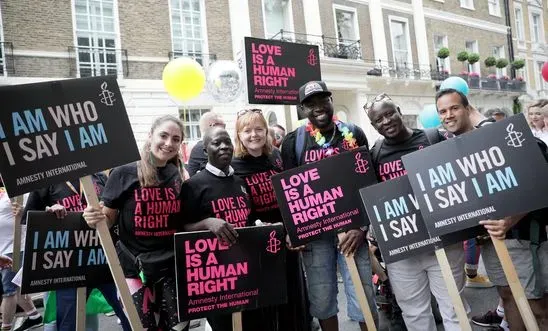
In May 2026, Amnesty International published an extensive analysis of the rise of media coverage and public discussion of the Gender Critical movement in the UK in a report entitled “Like a Snowball: The Growth and Impact of the Gender Critical Movement in the UK”. Two of the crucial findings in the report are the disproportionate level of coverage about trans people vis-à-vis the size of the trans population, and the near absence of the voices of transgender people themselves.
TPATH is able to publish reports like this, and pay all contributors a fair wage, because of the support of paid subscribers like you. Please help us in this mission (and get all articles one week early) by purchasing a paid membership, or upgrading your free membership now at the link below.
The report analysed four major outlets: The Guardian, The Sun, The Telegraph and The Times & Sunday Times between January 2020 and April 2025, and found that between these 4 publications an average of 264 articles per month, or 9 per day, were published about trans people. This is entirely disproportionate to the size of the trans population, which, according to the 2021 Census, represents 0.5% of the population (262,000 people). The report also found that, across the media coverage, only two trans people were mentioned by name: Brianna Ghey and Isla Bryson. Neither of these people are heard from directly. Brianna Ghey was a 16-year-old trans girl, killed in an attack where transphobia was a probable motivation. Isla Bryson is a trans woman who, before transitioning, was convicted of sexual violence offences and was initially placed in a women’s prison, but following a public outcry, Bryson was transferred to a men’s prison.
Prior to the analysis of the media, the report’s opening section provides a useful contextualization of the history of the rise of the gender critical movement, and how a niche and fringe issue became the focus of such significant media coverage. The report traces the rise in the media coverage and public discourse of the gender critical movement in the UK back to 2017-2018, when both the Scottish and Westminster governments held public consultations on amending the Gender Recognition Act. In hindsight, whilst the Gender Recognition Act had its flaws as it relied on obtaining a Gender Recognition Certificate which required obtaining a diagnosis of gender dysphoria, it is arguable that the consultations to find a more progressive way forward were unfortunate since they have backfired and exacerbated the problem of transphobia and provided an opportunity for gender critical positions to gain momentum and legitimacy. The report contextualises why the consultations into the Gender Recognition Act were required at this time, and this relates to the World Health Organization’s decision to remove gender dysphoria from its list of mental health disorders and classify it as a sexual health issue. Thus, a Gender Recognition Certificate based on a medical diagnosis of gender dysphoria was out of step with international thinking about the place of trans people in the medical system. However, the potential for improved conditions for trans people in society has massively backfired since the consultations have provided an impetus for blow back against trans rights and for the gender critical movement to emerge from the fringes of academic debate and into the foreground of media and public debate.
The focus of the Amnesty International report is the role of the media. It argues that “the press has a critical role to play in shaping public attitudes and holding the government to account”. Whilst this is true, the 4 publications the report focuses on constitute a tiny fraction of the media in the UK, and does not include significant parts of the traditional, mainstream “legacy” media e.g. BBC, ITV, Daily Mail, The Mirror etc. let alone the proliferation of new media outlets (e.g. GB News) and the rise of social media. The Amnesty International report does provide a number of practical recommendations “to support journalists in their daily work… to help incorporate more accurate, fair, and responsible reporting on issues affecting trans people”. However, these recommendations seem unduly and naively optimistic in assuming that the media wants to place the trans population in a more favourable light. The recommendation to journalists to “seek advice from trans-led organisations” and “ensure the voices of those affected are front and centre” seems oblivious to the idea that parts of media are purposefully seeking to give rise to the gender critical movement. The report does point to one of my irritations in the media; the “asking [of] gotcha questions such as ‘can women have a penis[?]’.” However, rather than asking journalists, who have an agenda and ideology that they are pursuing, to stop asking these “gotcha” questions, we need to find responses that show up the flaws in the line of questioning, so that this this line of questioning can be deflated.
There are recommendations in “Like a Snowball: The Growth and Impact of the Gender Critical Movement in the UK” that could be heeded by journalists, even those that do hold gender critical views, such as recognizing that being gender critical is an ideological stance, and that whilst the expression of such beliefs is protected in law (freedom of speech), it is not protected if it constitutes harassment or discrimination. Furthermore, in recognizing that being gender critical is an ideological stance, it can be noted that the consequences of this ideology are the existence/creation of restrictions on the ability of trans people to live their lives. The report also recommends that it should not be implied that gender critical views represent women’s views. This seems crucial since feminism can be interpreted through multiple understandings and does not need to be trans-exclusionary. Indeed, it is possible to be a woman and a feminist and a trans-ally. A further recommendation, in The Amnesty International report, is to “cover positive stories about trans people, their lives and contributions to their communities and society.” It may be even more useful if these are not stand-alone stories, but added to stories that take a negative stance towards trans people and/or disproportionately focus on criminality.
Amnesty International have produced a highly researched report. However, the report might have benefited from being a little less detailed, since its focus was 4 publications between 2020-2025. As already mentioned, these publications are not necessarily the most critical in judgment formation and public discourse in the UK. Furthermore, the time-frame of the study seems a bit late, something acknowledged within the report itself; “a rapid increase in coverage started before 2020… [there had been] a sharp growth in the amount of press coverage related to so-called ‘trans issues’ with roughly three and a half times as many articles in 2018-19 compared to 2012”. Thus, the report demonstrates the disproportionate volume of articles about trans-people, which it calculates to be around 9 articles per day across 4 publications. However, the time frame of 2020-2025 does not demonstrate a significant rise in coverage, since much of the increase in coverage occurred pre-2020. The Amnesty International report is valuable because it does not merely concern itself with the volume of articles about trans-people, but also the content of the articles: “in addition to increased volume, the sentiment of the coverage was negative, with trans people increasingly described as involved in controversy, demanding or aggressive and with a propensity to be offended”.
As someone living in the UK, it is the negative aspect of the coverage that has meant that consulting on reform to the Gender Recognition Act has, retrospectively, become a regressive moment for the trans movement. For me, one of the saddest aspects of the continuing coverage of trans people in the UK is that it conflates gender critical views with women’s views in a way that distorts and promotes a narrow understanding of feminism i.e. trans-exclusionary radical feminism. It is worth noting that it has been argued that gender critical feminism is merely a euphemism for trans-exclusionary radical feminism (Williams, 2014). Women are also being harmed because feminism has been hijacked into a battle between women’s rights and trans rights, through the media’s presentation of gender critical ideology as something universally held by women, which reduces women to a homogeneous group. The gender critical movement has manipulated feminism through the implication that feminism and a gender critical ideology are synonymous with each other, and by failing to acknowledge the openness and diversity inherent within feminism. The media has presented the gender critical movement as pitting feminism against trans rights, a manipulation of feminism that fails to recognize the many other fights that feminism could be having (e.g. child care, female health, the workplace etc.). Furthermore, the feminism of the gender critical movement is a victim-based feminism that assumes women need protecting from dangerous trans people, rather than a more liberatory and emancipatory feminism that sees women as free and capable agents. There are occasions where women’s rights and trans rights might be in conflict, but the media coverage has exploded this out of proportion, and failed to draw attention to the potential alignment between women’s and trans rights.
References
Amnesty International (2026, May 21). Like a snowball: the growth and impact of the gender critical movement in the UK. https://www.amnesty.org.uk/knowledge-hub/all-resources/like-a-snowball/
Williams, C. (2014, Dec 8). Gender critical feminism, the roots of radical feminism and trans oppression. The TransAdvocate. https://www.transadvocate.com/gender-critical-feminism-the-roots-of-radical-feminism-and-trans-oppression_n_14766.htm