
Who Gets to Transition? The Structural Failures of Trans Healthcare in the Philippines
We often hear that gender-affirming care saves lives... Gender-affirming care does save lives. But a claim repeated often enough starts to prove less than it should. "Gender-affirming care saves lives" answers a question no one in the Philippines is really asking."

TPATH is able to publish reports like this, and pay all contributors a fair wage, because of the support of paid subscribers like you. Please help us in this mission (and get all articles one week early) by purchasing a paid membership, or upgrading your free membership now at the link below. Please also check out our recent articles from Chris Hughes (My Experience as Non-binary and Anorexic and Amnesty International publish report into Gender Critical movement in the UK).
We often hear that gender-affirming care saves lives. The evidence shows that it can substantially reduce depression and suicidality for transgender individuals. Across different studies, the findings show that gender-affirming care is not cosmetic, and it is not optional in any meaningful clinical sense. Major medical organizations across the globe have arrived at some version of the same conclusion.
So, yes, gender-affirming care does save lives. But a claim repeated often enough starts to prove less than it should. "Gender-affirming care saves lives" answers a question no one in the Philippines is really asking.
The standard advice to transgender Filipinos (or any trans folk, really) is to seek medically supervised care and not self-medicate. While this isn't exactly wrong, it usually assumes you're either white or rich. It assumes you have access to a physician within reach who understands transgender health. It assumes you have money for consultations, bloodwork, and a lifetime of prescriptions. It assumes you have an employer or a school that won't penalize the hours lost to appointments. And assuming you're an average trans person in the Philippines, practically none of that is guaranteed.
So the more honest question isn't about whether gender-affirming care can save lives. It's about whether you could afford it to save yours.
Transition Is Political
Every healthcare system is a record of political priorities: what gets funded, whose concerns are prioritized, and whose aren’t.
The Philippine Department of Health has reported a shortage of roughly 190,000 healthcare workers nationwide. Additionally, as of 2024, the entire country - more than 110 million people - had only about 1,821 registered mental health specialists. This is far below what the World Health Organization considers adequate. The Mental Health Act of 2018 promised to integrate psychiatric and psychosocial care into the public system. However, implementation has been subpar since, and public facilities still report long waits and inconsistent availability. This is the baseline system transgender Filipinos are told to navigate patiently and by the book.
Additionally, it also doesn't help that Philhealth, the national insurance company, does not cover transition-related surgeries or treatments. Trans Filipinos usually pay for gender-affirming hormone therapy entirely out of pocket. In 2022, the Philippine Professional Association for Transgender Health formally asked Philhealth to create a benefits package covering gender-affirming hormone therapy. Unsurprisingly, the request went nowhere.
Local trans healthcare faces an additional political burden: it must continually justify its own legitimacy. In a country where Catholic doctrine still shapes public attitudes toward queerness, discussions about gender-affirming care rarely stay clinical. Instead, they tend to devolve into debates about whether transgender people deserve care at all.
Transition Is a Class Issue
Given that national insurance doesn’t cover transition costs, transition in itself is expensive in ways that are easy to underestimate. Hormones get treated as the centerpiece of transition, but they're actually the cheapest yet most visible part of a much larger financial commitment.
Reporting from the Philippine Collegian on trans healthcare gaps shows the numbers: medically supervised feminizing hormone therapy in the Philippines typically runs ₱1,500 to 2,000 a month, doctor visits ₱500 to 1,500 each, and routine labs around ₱1,000 - all of them being recurring expenses. A student interviewed for that reporting described living on a ₱300 daily allowance, which makes medically supervised care financially impossible. DIY hormones, bought over TikTok Shop, was the only option that fit her budget. Given her experience, she isn’t an outlier, either. According to a 2023 study of Filipino transgender patients, cost and provider scarcity are the two reasons cited most often by those who do DIY.
In order to receive medically supervised care, indirect costs compound the direct ones. Every follow-up is a transportation cost and, often, unpaid leave or a missed class. For people who rely on public transport or live paycheck to paycheck, those indirect costs can matter as much as the price of the medication itself. Healthcare is only accessible to people who can also afford the time needed to receive it.
Stable employment, financial support from family, flexible hours, a private vehicle - all of these factors make medically supervised care possible in a way poverty makes impossible. And when the supervised route becomes unaffordable, the need for care doesn't disappear. People will still look for whatever reduces the immediate cost, even at the price of more medical uncertainty.
Transition is a Geographical Issue
"Part of why this burden goes unquestioned is cultural, too. Filipino culture has a well-documented tendency to valorize endurance itself. The ability to absorb hardship without complaint is treated as a virtue instead of a symptom of a deeper problem. Commentators and researchers have started calling this "toxic resilience."
On top of expenses, a routine hormone follow-up can mean crossing provinces, sometimes islands, to reach a physician who actually knows transgender medicine, as they’re usually based in the metro. What should be a quick visit to the clinic costs not only time but money. The buildup of these factors ends up being impractical for someone who’s already financially strained.
Part of why this burden goes unquestioned is cultural, too. Filipino culture has a well-documented tendency to valorize endurance itself. The ability to absorb hardship without complaint is treated as a virtue instead of a symptom of a deeper problem. Commentators and researchers have started calling this "toxic resilience". Randy David, a Filipino sociologist, wrote in his blog about Filipinos' tendency to move past crises without holding anyone accountable for them, arguing that what gets celebrated as fortitude is often closer to fatalism. The pattern shows up after every major disaster or political controversy, and it shows up just as easily in healthcare. A trans person traveling four hours for a lab test isn't usually described as evidence of a broken system. In fact, they're more likely to be called "strong" for enduring such a thing. This kind of framing moves the burden of a structural failure onto the individual absorbing it, and makes the failure itself harder to see as something that could (and should!) be fixed instead of endured.
Even after physician consultations, hormone therapy requires periodic lab monitoring to stay safe and effective, yet the necessary tests or specialists may need separate scheduling with a different healthcare provider. Additionally, specialized gender-affirming services like blood tests to check for hormone levels still remain concentrated in Metro Manila.
Even for those who already live in Metro Manila, proximity doesn't necessarily translate into accessibility. The capital's notorious traffic means a single appointment can consume several hours in transit alone. This is time that could’ve been spent working, attending classes, having quality time with loved ones, or even resting.
Transition is a Colonial Issue
"There's a bitter irony here: that the rigid gender system now blamed for making transition difficult was a colonial import, and the colonized are left to pay the price while their colonizers have already moved on."
One of the most persistent criticisms of transgender healthcare in the Philippines is that transition is a Western import, that providing gender-affirming care means adopting a foreign ideology rather than practicing legitimate medicine. This narrative mistakes the language of modern transgender identity for the history of gender diversity itself.
During pre-colonial times, communities across the archipelago recognized spiritual and social roles that didn't map onto a strict male-female binary. The best documented are the babaylan: healers and community authorities across regions. Some babaylan were assigned male at birth and lived and were recognized in feminine roles; historian Kirby Araullo's research on precolonial Kapampangan society describes similarly gender-diverse figures, the binabayi, as valued members of society. Calling any of this "transgender" in the Western clinical sense would be anachronistic. But their existence is still evidence that gender diversity in the Philippines predates any colonizer showing up to “import” it.
Spanish rule, backed by Catholic doctrine, marginalized these roles through conversion and moral policing. American colonial administration then reorganized Philippine medicine and public health around Western biomedical frameworks that treated sex as a fixed binary category, a process the historian Warwick Anderson documents at length in Colonial Pathologies, his study of how American colonial medicine reshaped ideas about Filipino bodies between 1898 and the 1930s. Two colonial projects, working through different institutions, converged on the same effect: they changed how gender was understood, as well as how bodies came to be classified and treated by the systems meant to care for them.
Modern medicine has moved well past the binary assumptions of a century ago, but the institutions built on those assumptions haven't moved at the same pace. Transgender patients today routinely meet clinicians with barely any formal or consistent training in their care, and administrative categories that were never built to recognize them. There's a bitter irony here: that the rigid gender system now blamed for making transition difficult was a colonial import, and the colonized are left to pay the price while their colonizers have already moved on.
DIY is a Structural Response
With all that said, economic, geographical, and colonial burdens compound to the point that DIY hormone therapy starts looking less reckless and more like the predictable output of the system.
To be fair, the clinical concerns about DIY use are real. Self-medication poses genuine risk. But we can't assume that trans people don't already know that. The international research on why people choose it is fairly consistent: people turn to DIY hormones because the "proper" way is inaccessible, and the need for care doesn't wait for the system to catch up.
Local research backs this up directly. A 2026 phenomenological study of Filipino trans adults on gender-affirming hormone therapy (GAHT) describes participants navigating financial constraints, thin provider access, stigma, and, as a direct consequence, a reliance on self-directed hormone use as a coping strategy. Smaller studies from De La Salle University and De La Salle Health Sciences Institute, looking specifically at self-prescribed feminizing hormone use among trans women in Manila and Cavite, describe the same pattern. Trans people turn to social media and other peer networks for dosing information, adjusting through trial and error, because the formal system was too inaccessible to even be considered a real option.
Where Do We Go From Here?
Now, none of this argues against medical supervision. This argues against a model of supervision that assumes an infrastructure the Philippines doesn't currently have, and then treats the resulting gap as an individual failure of judgment rather than a structural one.
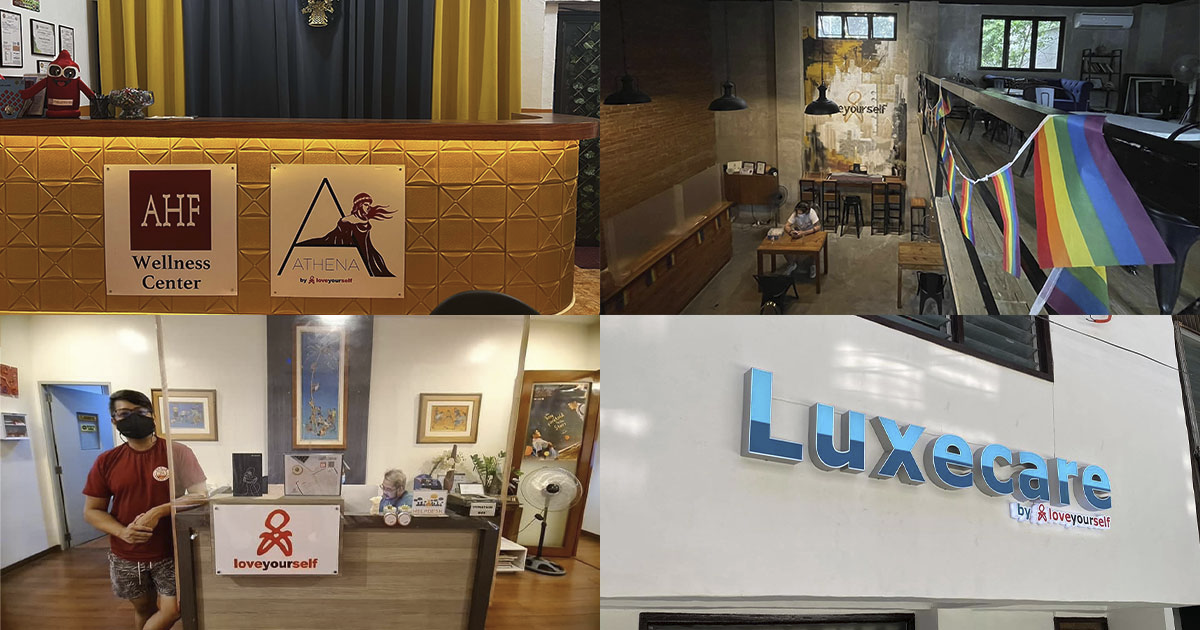
The immediate priority here is therefore not to eliminate DIY HRT, but to make it less dangerous. Harm reduction is already a model followed by LoveYourself, a volunteer-based non-profit organization in the Philippines. However, this organization is partly dependent on donor funding, and in early 2025, it temporarily suspended services after the Trump administration's freeze on US foreign aid stripped roughly $69.7 million in aid from programs across the Philippines. While LoveYourself (thankfully) continues to operate today, its temporary suspension highlights the dangers of outsourcing healthcare to foreign philanthropy and aid.
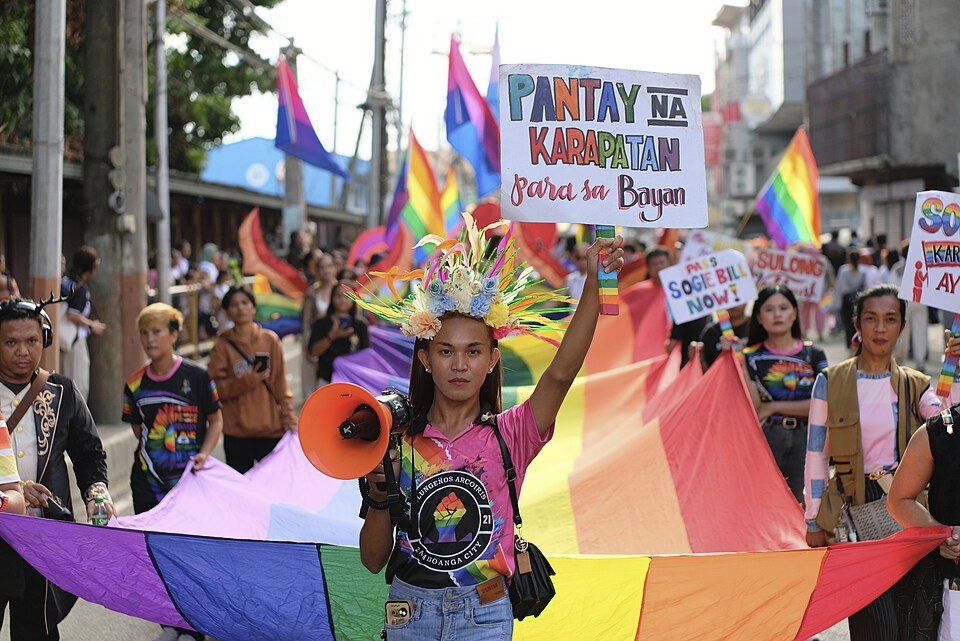
Ultimately, lasting change requires more than community initiatives. The SOGIE Equality Bill, which would bar discrimination on the basis of sexual orientation and gender identity, was first filed in Congress in 2000. As of 2026, it is still a pending case, having repeatedly passed the House only to stall in the Senate. Without a legal floor against discrimination, there is little institutional incentive to work on trans healthcare in the first place. This results in a system in which community organizations and DIY networks continue filling responsibilities that should belong to the public healthcare system.
Until gender-affirming care becomes genuinely accessible, the question will remain the same: who gets to transition?
References
Adler, C. (2022, February 25). Gender-affirming care can improve mental health outcomes in transgender youth. Washington School of Public Health. https://epi.washington.edu/news/gender-affirming-hormones-and-puberty-blockers-improve-mental-health-in-transgender-youth/
Anderson, W. (2006). Colonial Pathologies: American Tropical Medicine, Race, and Hygiene in the Philippines. https://doi.org/10.2307/j.ctv1168b5f
Bernales, J. M. C., Celestino, N. G. E., Flores, A. J. V., Lacsamana, M. a. O., & Toledo, J. a. C. (2024). A phenomenological study of transpinays’ lived experiences and perspectives in using feminizing hormone therapy in Cavite. GreenPrints. https://greenprints.dlshsi.edu.ph/bsp/120/
Bulatlat. (2025, June 24). After 25 years, SOGIESC Bill still awaits passage. https://www.bulatlat.com/2025/06/24/after-25-years-sogiesc-bill-still-awaits-passage/
Carandang, R. R., Tabigo-On, C. J., Oliquiano, P. H., Titong, A. M., Silva, K. M., & Quilala, P. (2026). Lived experiences of Filipino trans people on gender-affirming hormone therapy: a phenomenological study. International Journal of Transgender Health, 1–13. https://doi.org/10.1080/26895269.2026.2655905
Dacillo, B. a. C., Nuevo, N. S. V., Kaur, J., Aseremo, J. J. M., & Jebulan, J. M. a. U. (2023, June 27). ‘Kung Gusto Mo Gumanda, Take the Risk!’: Motivations, Outcomes, and Risks of Using Self-prescribed Feminizing Hormone Therapy among Transpinays. Animo Repository. https://animorepository.dlsu.edu.ph/conf_shsrescon/2023/paper_ghi/2/
David, A. (2026, May 6). Before the binary: Reclaiming erased Trans+ histories in the Philippines. QueerAF. https://www.wearequeeraf.com/before-the-binary-reclaiming-erased-trans-histories-in-the-philippines/
David, R. (2023, December 31). The hopeful ‘Pinoy.’ https://www.randydavid.com/2023/12/the-hopeful-pinoy/
Dela Cruz, A. J. (2024, December 29). Amid Health Care Gaps, Trans Filipinos Turn to DIY Gender-Affirming Hormones. Philippine Collegian. https://www.facebook.com/phkule/posts/pfbid02pd5HGxosfhU7fZYUHDsswtqvJhDTPRaSpvaF7UjWzRrczfzFURJP2PxLotrETmo3l
De Villa, K. (2022, November 19). Group seeks PhilHealth package for transgenders | Inquirer News. INQUIRER.net. https://newsinfo.inquirer.net/1695221/group-seeks-philhealth-package-for-transgenders
Eustaquio, P. C., Cruz, J. D. M. D., Araña, Y., Rosos, B., Rosadiño, J. D. T., Pagtakhan, R. G., Regencia, Z. J. G., & Baja, E. S. (2023). Prevalence of and factors associated with the use of gender-affirming hormonal therapy outside the reference regimen among transgender people in a community-led clinic in Metro Manila, Philippines: a retrospective cross-sectional study. BMJ Open, 13(9), e072252. https://doi.org/10.1136/bmjopen-2023-072252
Gay & Lesbian Alliance Against Defamation [GLAAD]. (2024, June 26). Medical Association statements in support of health care for transgender people and youth. https://glaad.org/medical-association-statements-supporting-trans-youth-healthcare-and-against-discriminatory/
Kirby Araullo (Historian). (2021, June 18). Gender in Precolonial Philippines [Video]. YouTube. https://www.youtube.com/watch?v=6T2SIl8x5Qc
Lagua, B. D. (2025, February 7). Address toxic resilience now. BusinessWorld Online. https://bworldonline.com/banking-finance/2025/02/07/651728/address-toxic-resilience-now/
Lally, J., Samaniego, R. M., & Tully, J. (2019). Mental health legislation in the Philippines: Philippine Mental Health Act. BJPsych International, 16(03), 65–67. https://doi.org/10.1192/bji.2018.33
LoveYourself Inc. (n.d.). About us - LoveYourself Inc. https://loveyourself.ph/about-us/
Mangaluz, J. (2024, May 22). PH has a shortage of 190,000 healthcare workers, says DOH. INQUIRER.net. https://newsinfo.inquirer.net/1943481/ph-has-a-shortage-of-190000-healthcare-workers-says-doh
Respicio, H. (2025, February 12). Gender Transition from Female to Male in the Philippines. Respicio & Co. https://www.lawyer-philippines.com/articles/gender-transition-from-female-to-male-in-the-philippines
SunStar Cebu. (2024, November 3). Tell it to SunStar: Outgrowing toxic resilience. SunStar Publishing Inc. https://www.sunstar.com.ph/cebu/tell-it-to-sunstar-outgrowing-toxic-resilience
Tanis, F., & Langfitt, F. (2025, February 26). The Trump administration kills nearly all USAID programs. NPR. https://www.npr.org/sections/goats-and-soda/2025/02/26/nx-s1-5310673/usaid-trump-administration-global-health
Tekniker, I. (2025, May 5). Bridging the gap: mental health care in the Philippines. The Borgen Project. https://borgenproject.org/mental-health-care-in-the-philippines/