
Once upon a time... four trans women were running for a seat in Peru's Chamber of Deputies and Senate

During the latest presidential crisis, unfortunately, an incident that went unnoticed by the traditional media was another example of the abuses suffered by transgender women in Peru. This was an interesting scenario because it involved the police (PNP) and one of the four candidates running for Congress in the next elections. It was particularly interesting because historically, the relationship between the police and the trans community has been extremely tense and violent.
On the 17th of February, congressional candidate Gahela Cari, and a group of people, were peacefully protesting in Lima's main square against the many accusations against acting president José Jerí. However, the situation turned violent when the police intervened. Some witnesses have reported that the police, using excessive force, beat Cari while the protesters tried to stop them. As a result, Gahela was arrested by several police officers and taken to the Monserrate police station.
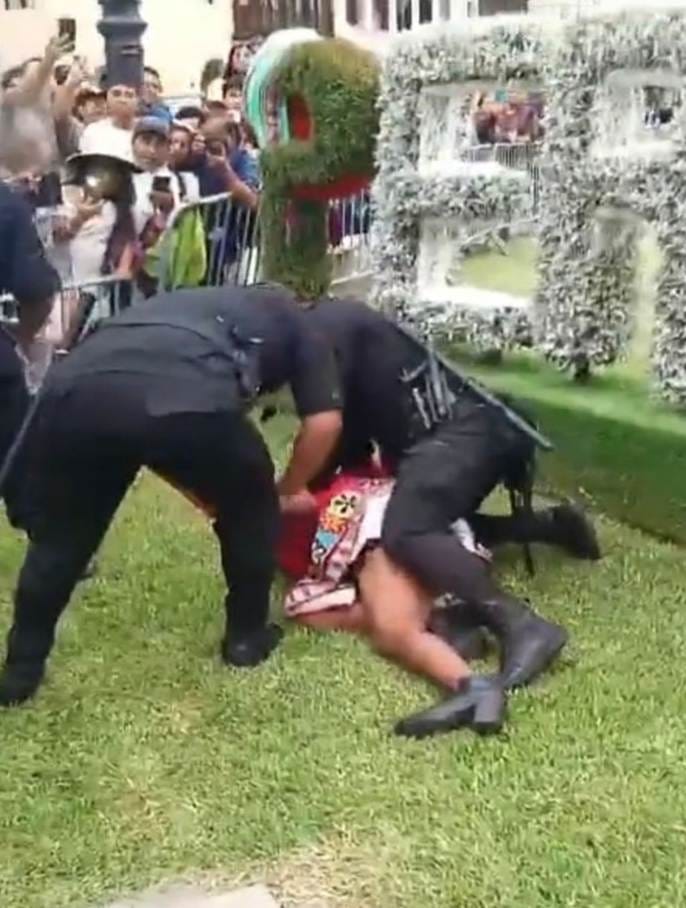
Some politicians and human rights organizations have described these actions as disproportionate. Not only because of how the arrest was carried out, but also the irregularities that followed during the 48 hours that Gahela was detained at the police station. Cari's friends initially reported that she was not allowed to see a lawyer, a right that all Peruvians have in any of these proceedings. In addition, the violence with which she had been treated caused major concern in her community, because she had recently undergone surgery.
Although Gahela was able to escape this process unharmed, not all trans women are so lucky. Despite the fact that the 2017 census of the Peruvian LGBTIQ+ community does not list the PNP as one of the main aggressors of the community, different studies have shown the violence with which these authorities treat them. During the 20th century, historians have documented the inhumane treatment that many trans people have suffered at the hands of the police. One example was the batidas (Raids in spanish) carried out as a form of social cleansing for the arrival of Pope John Paul II in the 1980s. Or perhaps the case of Azul Rojas Marín, one of the most representative cases in recent times, who was beaten, tortured, and sexually assaulted by police officers. This case was brought before the Inter-American Court of Human Rights (IACHR), which ruled in favor of Rojas in March 2020.
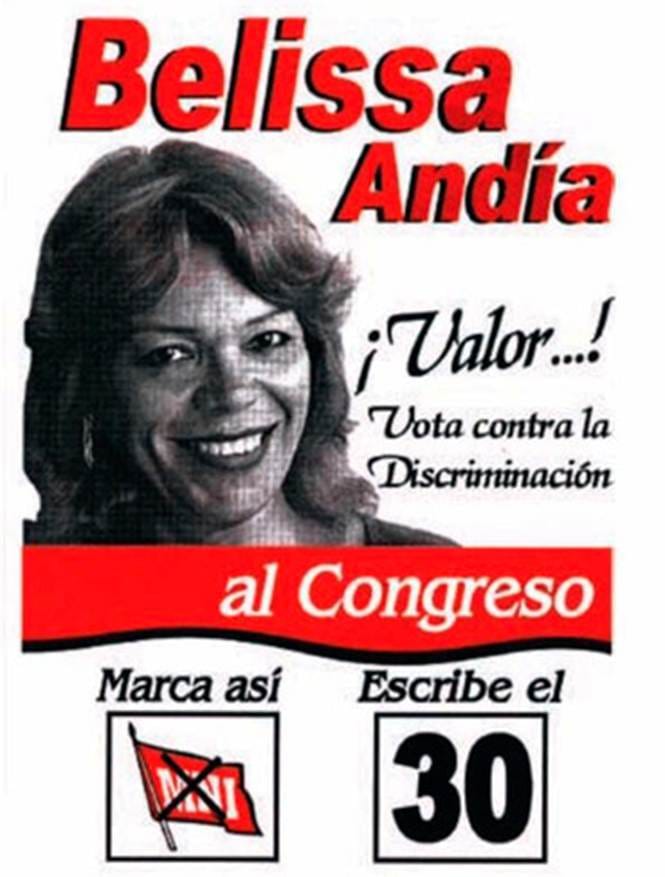
This complicated relationship between the pólice and trans community could change in the upcoming elections, since four trans women are running for the Senate and House of Representatives. This isn't the first time that trans women have run for such important representative positions. Activist Belisa Andía was a candidate for Congress with the Movimiento Nueva Izquierda party in 2006, while Jana Villaizan stood in the same elections for the Andean Parliament with the Partido Socialista.
This year, the scene is different, because despite the growing popularity of some conservative parties, four trans candidates are running in centrist and left-wing political projects. Gahela Cari, Lucrecia Zevallos, Leyla Huertas, and Karla Cayani aim to raise awareness of the problems faced by the trans community in this country. Their candidacies represent the quest for political representation and the effort to broaden the public debate on rights, inclusion, and citizenship. Furthermore, their participation reflects the progress and challenges that the trans population still faces in accessing spaces of political power.
Candidates for the Chamber of Deputies
Gahela Cari (33 years)
Gahela identifies as a travesti, a gender identity within the trans community that has a very marked racial and class component in Latin America. She also identifies as an Afro-Andean woman from migrant parents. She studied law at the San Luis Gonzaga University, but does not have a degree because the university does not recognize her identity. She began her political career in 2020, focusing on violence against transgender people and the lack of government action during the COVID-19 pandemic. The following year, she ran for Congress with the left-wing party Juntos por el Perú, being one of the most visible candidates from the LGBTIQ+ community in those elections. Despite not winning a seat in parliament, against all expectations, she did obtain enough votes to become an alternate member. For the 2026 elections, Gahela is running for the Chamber of Deputies with the Venceremos party.
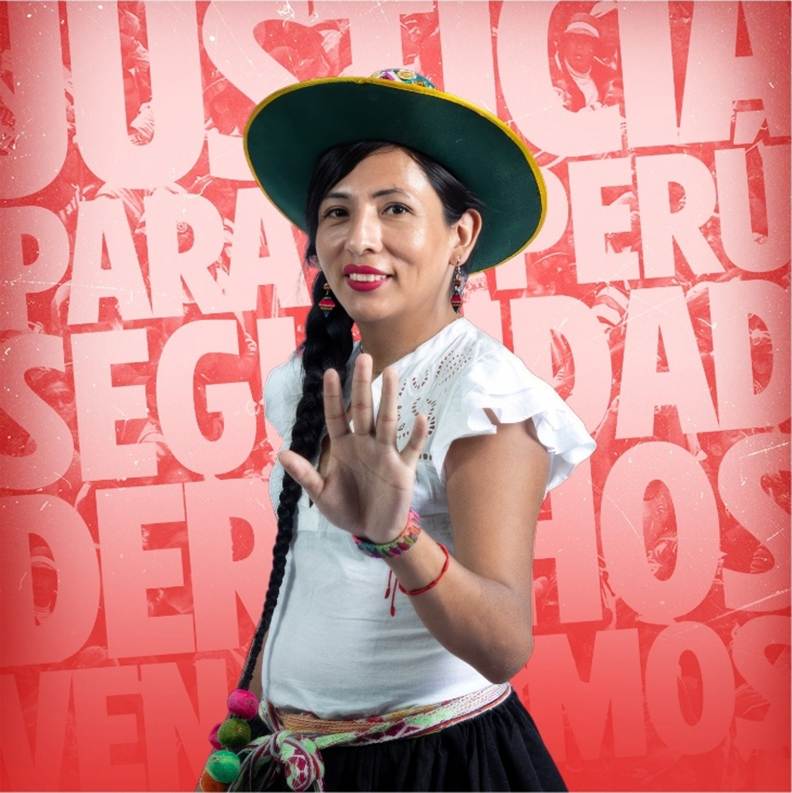
Among her proposals, Gahela will promote an Gender Identity Law.that allows people to change their name and gender on their ID card quickly and free of charge, guaranteeing access to health, education, and employment. In general, Cari proposes a Truth Commission for the murders during the protests between 2022 and 2023. Finally, one of her most controversial proposals is undoubtedly the abolition of the police. Cari proposes to replace the PNP with a different security and justice system. As a result, some journalists have suggested that her violent arrest on February 17 was retaliation for this proposal.
Lucrecia Zevallos (51 years)
Also known as Lucrecia Black, she identifies as a transgender woman. She is a famous psychic with over 35 years of experience. She is also the director of Miss Peru Trans, one of the most well-known beauty contests in the country, and has a foundation through which she is dedicated to philanthropic work in Peru. This election, Lucrecia is making the jump into politics with the centrist Peru Primero party. As she has mentioned on numerous occasions, her main motivation is to give a voice to the most forgotten and marginalized sectors of our society.

As a congresswoman, her proposals focus on four key points, two of which are directly related to the LGBITQ+ community. For Zevallos, it is essential that all Peruvians have access to good medical care, free of stigma, in both the public and private health systems. Along the same line, she seeks to promote a comprehensive anti-discrimination law that will strengthen the legal framework for punishing discrimination based on sexual orientation and gender identity. Her other two proposals are related to protecting vulnerable youth and adults and streamlining procedures for reporting discrimination.
Candidates for The Senates Chamber
Leyla Huerta Castillo (47 years)
Leyla Huerta identifies as a trans woman and feminist. She has been primarily focused on activism for trans rights for more than twenty years. Huerta has a degree in Agricultural Engineering from the Universidad Nacional Agraria La Molina. Like many trans women who had the privilege of attending university, she was unable to pursue a career in her field due to social prejudice. In 2015, she founded the organization Féminas Perú with the aim of promoting leadership, visibility, and access to rights for transgender women. Through this platform, she has promoted initiatives for political advocacy, community training, and support for transgender people. This is not her first time running for public office. As part of the Morado Party, Leyla attempted to run for provincial councilor of Lima in 2022. She is currently running for the Senate with the same party.
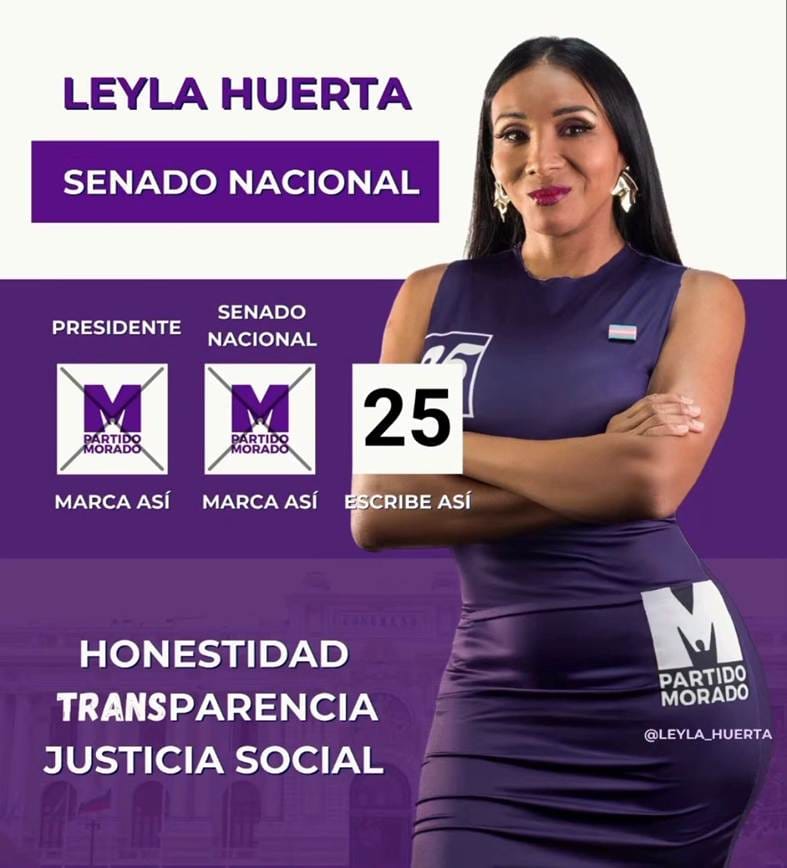
Huerta believes that the elections are a great opportunity to make significant changes in politics. In conversations with the candidate, Leyla thinks that the recent political crises are due to the pact between certain parties. Therefore, with the return of the bicameral legislative model, citizens have the opportunity to choose their representatives to the Senate with greater consciousness. If she is elected, she considers one of her main objectives to be legislating impartially on the decisions of the executive power and the Chamber of Deputies, especially if they seek to promote public policies against gender diversity[1].
She is also encouraged by the fact that every political campaign increasingly includes more candidates from the LGBTIQ+ community, especially transgender people. The founder of Féminas Perú believes that LGBITQ+ candidates who win seats in both chambers should put the Transgender Identity Law, Equal Marriage, Criminalization of Hate Crimes, and the outlawing of conversion therapy on the agenda. These laws are essential for the community to feel safe in the country.
Karla Paloma Cayani (46 years)
Karla Cayani identifies as a trans woman, Andean, and migrant. Like Gahela, Karla does not come from the capital or an urban area. She is from the locality of Madrigal in the department of Arequipa, which is one of the most important regions in southern Peru and is known for being one of the most conservative places. Cayani is a primary school teacher for the Santa María Public Higher Education Institute, but she was only able to work for a short time due to prejudice and obstacles from the Ministry of Education. As a result, she embarked on a career in hair styling, where she has worked for more than 15 years. She is also an important activist for trans rights in her region. In 2018, she was a founder of the Arequipa chapter of Féminas Perú. This is not her first time involved in politics. In 2022, she ran for the Arequipa Regional Council and was the target of countless attacks on social media. In these elections, Karla Cayani is running for Senator for Arequipa with the left-wing political party Venceremos.

In an interview for the digital magazine Crónicas de la Diversidad, Karla believes that the reaction of Arequipa's electorate to her new nomination was mixed, but mostly negative. “I think they are afraid that Karla wants or could take the space or position that they feel is only for them. Seeing a trans women and a migrant makes them feel afraid,” says Cayani.
In conversation with her, she reaffirms this position, as she strongly believes that behind the transphobia and the attacks she faces during the campaign, there is the idea that only cisgender people can hold political positions because of the importance of these roles. She believes that her opponents see her as a threat because she represents not only trans people, but also those marginalised in our society[2].
Her proposals focus on promoting public policies on sexuality and transforming opportunities in the state. On the one hand, she considers a gender identity law to be very important in order to provide a dignified life and better opportunities for the entire transgender community. Similarly, she will promote legislation to make abortion legal, safe and free, because she believes that women should have control over their own bodies. On the other hand, Cayani proposes that Arequipa should become a hub for development across Peru. Through this, she aims to decentralise the country, providing more opportunities for people in her region. In this vein, the proposed ‘Law of the Thousand Trades’(Ley de los Mil Oficios) seeks to ensure that people engaged in activities not covered by the retirement system have the opportunity to receive a decent pension in the future. Finally, as a priority, Karla believes that one of the Senate’s first actions should be to repeal the so-called pro-crime laws, which were promoted by some parties of the Mafia Pact in the last legislative period.
Before the elections
The violent arrest of Gahela Cari this February represents the complex reality faced by the trans community. Despite everything, some political parties chose to include a trans representative among their list of candidates for the Senate and Chamber of Representatives. Despite their political differences, these four women agree on the necessity of promoting laws that protect trans people and the entire LGBTIQ+ community. In this way, Gahela, Lucrecia, Leyla, and Karla will have the opportunity to become the first trans women to obtain a position of representation elected by popular vote.
In addition, whoever wins one of these seats would have to face conservative forces in Congress. According to the IPSOS opinion poll, voting intentions for Senators and Deputies are led by Fuerza Popular (FP) and Renovación Popular (RP). These parties are considered to be the most corrupt and conservative in the country. Despite this, last February, the results of the Trans and LGB+ Voting Intentions poll conducted by Miss International Trans Peru and Féminas were published. Beyond the presidential results, it is interesting to note that, in their respective categories, both Gahela Cari and Leyla Huerta are the candidates with the highest percentage of voting intention within the LGBTIQ+ community. On April 12, we will see the final results for these four women. However, in a country like Peru, anything can happen in the last month of campaigning.
References
Caretas. “Denuncian detención arbitraria de activista Gahela Cari.” Caretas. Accessed March 12, 2026. https://caretas.pe/politica/denuncian-detencion-arbitraria-de-activista-gahela-cari/.
Campos Rimachi, Liz. “Arequipa: candidata trans denuncia discriminación en campaña electoral (VIDEO).” El Búho, September 29, 2022. https://elbuho.pe/2022/09/arequipa-candidata-trans-denuncia-discriminacion-en-campana-electoral-video/.
Centro de Promoción y Defensa de los Derechos Sexuales y Reproductivos (PROMSEX). Igualdad para construir democracia. Lima: PROMSEX. https://promsex.org/wp-content/uploads/2018/03/IgualdadParaConstruirDemocracia.pdf
Coca Pimentel, Valeria. “Azul Rojas, la mujer trans torturada que obtuvo un fallo histórico en la Corte IDH, pero que el Estado peruano ignora.” Infobae, October 1, 2022. https://www.infobae.com/lgbt/2022/10/01/azul-rojas-la-mujer-trans-torturada-que-obtuvo-un-fallo-historico-en-la-corte-idh-pero-que-el-estado-peruano-ignora/
Coca Pimentel, Valeria. “Karla Paloma, la primera mujer trans que postula a un cargo público en Arequipa.” Infobae, October 2, 2022. https://www.infobae.com/lgbt/2022/10/02/karla-paloma-la-primera-mujer-trans-que-postula-a-un-cargo-publico-en-arequipa/
Crónicas de la Diversidad. “Karla Cayani. #1 para Senadora por Arequipa en la Alianza….” YouTube, 2:58. https://www.youtube.com/watch?v=TDQ3177LoO8
Fowks, Jacqueline. “Hago política para luchar contra la violencia de género en Perú.” El País, April 3, 2021. https://web.archive.org/web/20210403184510/https://elpais.com/internacional/2021-04-03/hago-politica-para-luchar-contra-la-violencia-de-genero-en-peru.htm
Instituto Nacional de Estadística e Informática (INEI). Primera Encuesta Virtual para Personas LGBTI, 2017: Principales resultados. Lima: INEI, 2018. https://www.inei.gob.pe/media/MenuRecursivo/boletines/lgbti.pdf.
Instagram user [@lucreciablackfoundation]. “Caption of the Instagram post (if no title).” Instagram, accessed March 12, 2026. https://www.instagram.com/p/DVqz8r6gEdd/?hl=es&img_index=4.
Ipsos Perú. Intención de Voto Senado Nacional Febrero 2026 – 2 | Encuesta Perú 21 – Ipsos. February 27, 2026. https://www.ipsos.com/es-pe/intencion-de-voto-senado-nacional-febrero-2026-2-encuesta-peru-21-ipsos
Lucrecia Black Foundation. “Photos.” Facebook. Accessed March 12, 2026. https://www.facebook.com/lucreciablackfoundation/photos
Lucreciablack0 [@lucreciablack0]. “TikTok video by @lucreciablack0.” TikTok. Accessed March 12, 2026. https://www.tiktok.com/@lucreciablack0/video/7602380086607727892.
Lucreciablack0 [@lucreciablack0]. “Photo post by @lucreciablack0.” TikTok. Accessed March 12, 2026. https://www.tiktok.com/@lucreciablack0/photo/7601407722529082644.
Meza, Amanda. “Leyla Huerta: La apuesta por una lucha colectiva de las mujeres trans.” La Indómita, August 30, 2025. https://laindomita.pe/leyla-huerta-la-apuesta-por-una-lucha-colectiva-de-las-mujeres-trans/
Miss Perú Trans. “Miss Perú Trans.” Instagram. Accessed March 12, 2026. https://www.instagram.com/missperutrans/?hl=es-la.
Paucar, Luis. “Gahela Cari, activista trans y candidata, lleva 48 horas detenida sin cargos: CNDDHH denuncia lesiones por represión policial.” Infobae, February 18, 2026. https://www.infobae.com/peru/2026/02/18/gahela-cari-activista-trans-y-candidata-lleva-48-horas-detenida-sin-cargos-cnddhh-denuncia-lesiones-por-represion-policial/
Redacción EC. “Elecciones 2026: Gahela Cari y Jair Ramírez debaten sobre pena de muerte y seguridad ciudadana en ‘Versus’ de El Comercio.” El Comercio, February 10, 2026. https://elcomercio.pe/politica/elecciones/elecciones-2026-gahela-cari-y-jair-ramirez-debaten-sobre-pena-de-muerte-y-seguridad-ciudadana-en-versus-de-el-comercio-ultimas-noticia/
Saavedra, Narda. “PNP detiene de forma ‘violenta y arbitraria’ a candidata y activista trans Gahela Cari.” La República, February 17, 2026. https://larepublica.pe/politica/2026/02/16/pnp-detiene-de-forma-violenta-y-arbitraria-a-candidata-y-activista-trans-gahela-cari-hnews-1567120
Wikipedia contributors. “Féminas Perú.” Wikipedia, The Free Encyclopedia, last edited October 25, 2025. https://es.wikipedia.org/wiki/F%C3%A9minas_Per%C3%BA
[1] G. Mori Bolo, personal communication, March 10, 2026
[2] G. Mori Bolo, personal communication, March 16, 2026
Supporter culture is shaped by chants, colours, badges, and the shirts worn on matchday when the difference between player and fan versions becomes part of the discussion. Discussions about historic crest details help readers think about how a team shirt fits their own use. Those exploring club collections may also consider, best football shirts for supporters is a phrase that sits comfortably in content about football identity. For many supporters shows how football apparel can carry history without becoming a sales pitch.